
In today’s world, wellness can feel like another checklist.
Eat more greens. Get to the gym. Take your supplements.
But true health isn’t about ticking boxes. It’s about tending to the whole of you — the body, mind, and spirit working together. When we nourish each part, balance returns and the body remembers how to heal.
For more than three decades, I’ve guided clients through this whole-person approach. Again and again, I’ve seen how small, intentional steps in every area of life can lead to real and lasting transformation.
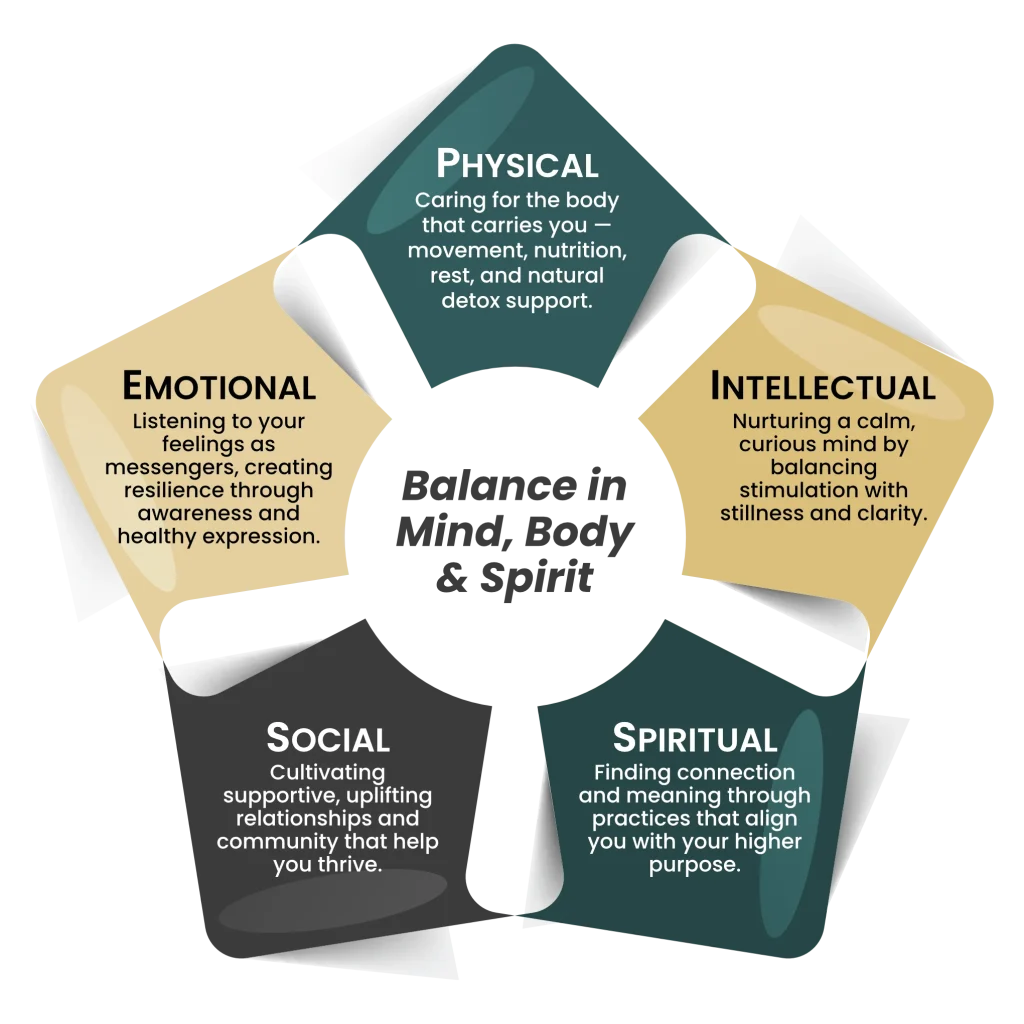
This guide explores the five areas of holistic health — physical, emotional, intellectual, spiritual, and social — and offers simple, natural ways to begin weaving them together as a whole person health model you can carry into everyday life.
What are the five areas of holistic health care?
Holistic health is the understanding that everything is connected. Stress in the mind can appear as digestive troubles. Isolation can weaken immunity. A restless body can cloud the spirit. Each area touches the others, which means true healing happens when we care for them all — a reminder of the importance of mind body spirit balance in any holistic wellness model.
The five areas of holistic health are: physical, emotional, intellectual, spiritual, and social. Imagine them as the spokes of a wheel. When one is neglected, the wheel wobbles. When each is strong, you move forward with steadiness and energy.
Even leading organizations like the Cleveland Clinic and the NCCIH recognize the value of caring for the whole person, not just isolated symptoms.
Physical Health — Caring for the Body That Carries You
Most people begin here, because it’s the most visible. But physical health is more than managing weight or keeping up with exercise. It’s about supporting the body’s ability to function, heal, and restore itself.
Some gentle ways to do this include:
- Choosing movement that feels good — a walk in the evening, gentle stretching, dancing in your kitchen, or yoga
- Eating whole, nourishing foods that give your body the minerals and vitamins it needs
- Making time for deep, restorative sleep
- Staying hydrated throughout the day
Your lymphatic system also plays a quiet but powerful role. When it flows freely, your body can release toxins more effectively, easing inflammation and strengthening immunity. But when it becomes congested or sluggish, it can contribute to issues like swelling, fatigue, or chronic inflammation — sometimes even underlying lymphatic system diseases that are easy to overlook. Gentle practices like dry brushing, hydration, or lymphatic detoxification therapy can help restore balance and keep this natural cleansing system moving. These practices aren’t a replacement for medical care, but they can gently complement it and support your body’s ability to heal.
Another gentle way to understand what your body needs is through Hair Mineral Analysis testing. This simple, non-invasive test can reveal nutrient patterns and mineral imbalances that may be affecting your energy, sleep, and stress response — helping you see what’s really going on beneath the surface.
Physical wellness doesn’t have to mean perfection. It’s about listening to your body’s signals and responding with care.
If fatigue or low energy have been some of those signals, you may find my post Why Am I So Tired All the Time especially helpful — it looks at natural causes of exhaustion and gentle ways to restore balance.
What Role Does Emotional Health Play in Overall Wellness?
Where physical health cares for the body, emotional health tends to the heart. Emotions aren’t problems to fix — they’re signals that guide us toward what needs attention. Suppressing them often leads to stress; listening to them opens the door to healing.
For some, this begins with journaling — giving feelings a safe place to land on paper. For others, it’s found in honest conversations with a therapist, coach, or trusted friend. Breathwork and mindfulness can create moments of calm in the middle of the day, reminding the nervous system it’s safe to relax.
Most importantly, emotional health means making room for all of your feelings — joy and peace, but also grief, frustration, or anger. When we allow emotions to be felt instead of buried, they begin to move through us. Boundaries help here too, creating space to say no when your heart needs rest.
To explore this area more deeply, I’ve shared a post dedicated to the heart of emotional well-being — Emotional Health: The Heart of Holistic Wellness.
Intellectual Health — Nourishing a Calm and Curious Mind
Your thoughts shape your reality. Mental health is about clarity, curiosity, and peace of mind. It’s not just about academic learning—it’s about how you think, what you consume, and how you stay mentally engaged in a balanced way.
Ways to nourish your mental well-being:
- Starting a meditation practice or spending quiet moments in reflection
- Exploring hobbies that excite your curiosity or spark creativity
- Enjoying a good book as a way to unwind and learn gently
- Stepping away from screens, slowing your pace, and embracing stillness without guilt
When the mind is calm and clear, the body has space to heal. Intellectual health isn’t about cramming in more learning; it’s about cultivating peace and curiosity that carry into every part of life.
What Practices Enhance Spiritual Well-Being?
Just as the mind needs clarity, the spirit needs connection. Spiritual health isn’t defined by religion, though for some it includes it. It’s about feeling connected to something larger than yourself — whether that’s God, nature, love, intuition, or a sense of purpose.
For many, this begins with simple daily practices. A few moments of quiet before the day starts. Writing down what you’re grateful for. Stepping outside and feeling the sun or the breeze. Reading or studying teachings that inspire you. Offering kindness to someone else without expecting anything in return.
When the spirit feels connected, life feels meaningful. Challenges don’t disappear, but they become easier to carry because you know you’re not carrying them alone.
Social Health — The Healing Power of Connection
The final area of holistic health is one many people overlook: social connection. Yet the quality of our relationships can influence everything from our immune system to our lifespan. Loneliness is now recognized as a significant health risk, while healthy connection is deeply protective.
Nurturing social health doesn’t mean surrounding yourself with dozens of people. It means creating relationships that feel supportive and safe. That might be as simple as sharing a meal with family, joining a community that shares your values, or picking up the phone to reconnect with a friend. It also means learning to release connections that consistently drain your energy, making space for ones that uplift you instead.
Research continues to show that supportive connection is as essential as diet and exercise (NIH).
When we feel connected, we remember that healing isn’t a journey we’re meant to walk alone.
Integrating the Five Areas of Holistic Health
Each of these areas — physical, emotional, intellectual, spiritual, and social — interweaves with the others. Stress can weaken the immune system. Isolation can fuel depression. Lack of sleep can cloud your spiritual clarity. But the reverse is also true: caring for one area often strengthens the rest.
The key is to start small. Choose one area that’s been asking for your attention and offer it gentle care this week. Over time, small acts build into lasting change.
Holistic health isn’t about being perfect. It’s about being whole.
Want personalized guidance on where to begin? I offer holistic services designed to support all five areas — from nutritional counseling to lymphatic care and hair mineral analysis.
Frequently Asked Questions about Holistic Health
What is whole person wellness (or whole person health)?
Whole person wellness means caring for all five areas of health together — body, mind, and spirit. It’s about balance and harmony, not perfection, and is sometimes called a whole person health care approach.
How is holistic health different from conventional care?
Conventional medicine often focuses on treating symptoms. Holistic health looks for root causes and emphasizes prevention, balance, and the body’s ability to heal. The best care often combines the strengths of both.
Can holistic health support chronic conditions?
Yes. While it doesn’t replace medical treatment, holistic care can support the body’s healing capacity and improve quality of life for people with chronic illness, autoimmune conditions, or cancer — especially when practiced alongside guidance from your medical provider.
How do I begin a holistic wellness journey?
Start with one small step — perhaps focusing on rest, hydration, or emotional care. If you’d like personalized guidance, working with a holistic practitioner can help you create a plan designed just for you.
Can Dr. Betsy help me develop a personalized health plan?
Yes. Dr. Betsy works one-on-one with clients to create customized wellness plans based on your individual needs. Whether you’re navigating chronic illness or simply want to feel better in your day-to-day life, she meets you where you are and helps you move forward with clarity.
What services does Dr. Betsy offer for holistic health?
Dr. Betsy offers hair mineral analysis, nutritional counseling, lymphatic drainage support, and more. Each service is designed to support the five areas of holistic health in a gentle, personalized way. Explore her full list of services →
Ready to go deeper into your own holistic wellness journey?
Caring for your whole self doesn’t have to feel overwhelming. When each part of you is supported, healing becomes a natural process.
At Peaceful Solutions Natural Health, I offer care that reflects all five areas of wellness. Through Hair Mineral Analysis, we can uncover hidden mineral imbalances and guide precise supplementation. With lymphatic support, we help the body release toxins and strengthen immunity. And through nutritional counseling, we create plans that truly fit your life and needs.
If you’re ready to feel balanced, hopeful, and empowered again, I’d be honored to walk with you.
👉 Contact me today to begin your Transformational Wellness Journey.
Peace, love, and wellness,
Dr. Betsy Goggan
Founder, Peaceful Solutions Natural Health